

Key Takeaways
- Late-stage dementia commonly affects communication, mobility, eating habits, and the ability to perform daily activities independently.
- Many people with late-stage dementia rely on nonverbal communication, including facial expressions, body language, and tone of voice.
- Family caregivers can provide support by maintaining routines, creating a calm environment, and watching for signs of discomfort.
- Physical care needs often increase and may include assistance with mobility, personal hygiene, and meals.
- Memory care communities provide personalized care plans, specialized dementia support, and 24-hour supervision.
- Professional memory care can support both residents and family caregivers by providing safety, consistency, and ongoing guidance.
What Families Face in Late-Stage Dementia
Watching a loved one move through the later stages of dementia is one of the most emotionally complex journeys a family can experience. You may be asking yourself what to expect, how to help, and what options are available when daily care becomes more than one person can handle alone.
Knowing what late-stage dementia looks like, and what support is out there, can help your family feel more grounded and less alone during this time. While every person’s experience is unique, learning about late-stage dementia and the support options available can make it easier to navigate this stage with confidence and compassion.
What Late-Stage Dementia Looks Like
Late-stage dementia affects people differently, but families often notice similar changes as the condition progresses. While these changes can be difficult to witness, understanding them can help you provide more effective support and recognize when additional care may be beneficial.
Changes in Communication
Many people with late-stage dementia experience significant changes in their ability to communicate verbally. Conversations may become shorter, finding the right words may become difficult, or spoken communication may decrease altogether. Even when words become limited, facial expressions, tone of voice, and familiar sounds can still provide comfort and connection.
Increased Need for Daily Assistance
As dementia progresses, daily activities often require more support. Tasks such as dressing, bathing, grooming, and using the restroom may become difficult to manage independently. Family caregivers frequently find themselves providing hands-on assistance throughout the day to help their loved one remain comfortable and safe.
Mobility and Physical Changes
Late-stage dementia can affect balance, coordination, and overall mobility. Walking may become more difficult, and some people require assistance moving between rooms, standing up, or sitting down safely. These changes often increase the need for supervision and support during daily activities.
Changes in Eating and Personal Care
Eating can become more challenging as dementia advances. Some people have difficulty using utensils, recognizing food, or swallowing safely. Additional assistance during meals and personal care routines often becomes necessary to help maintain comfort and well-being.
How to Support a Loved One with Late-Stage Dementia
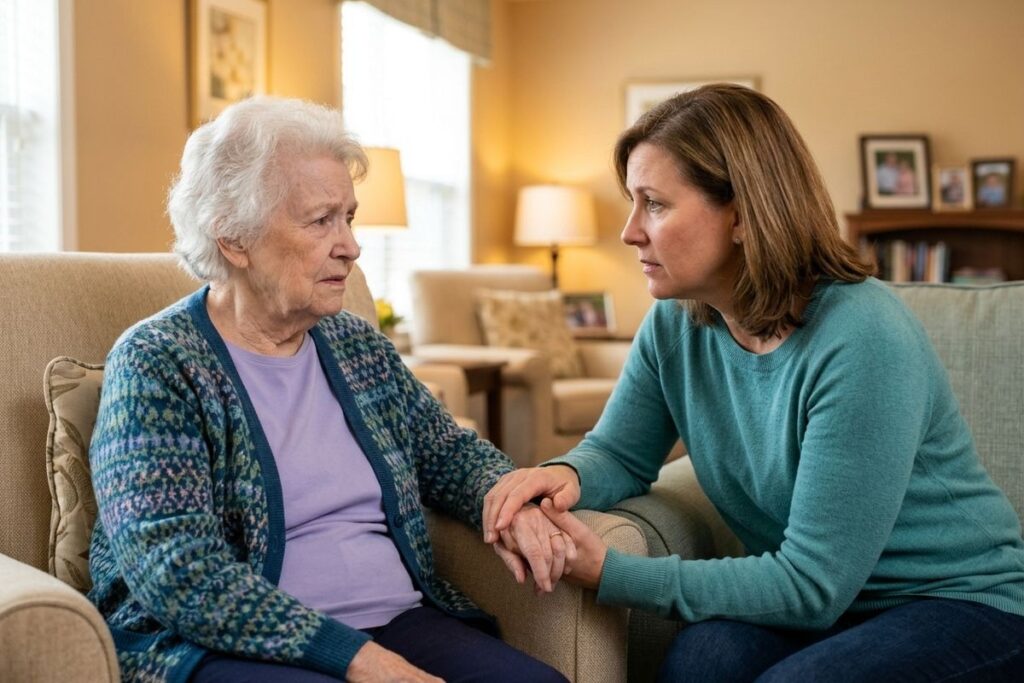
Supporting a loved one with late-stage dementia often means focusing on comfort, consistency, and meaningful connection. While care needs may increase, there are still many ways families can provide reassurance and help their loved one feel supported throughout the day.
Some ways to support a loved one include:
- Maintaining familiar daily routines whenever possible
- Speaking calmly and using simple, clear communication
- Watching for nonverbal signs of pain or discomfort
- Creating a quiet and comfortable environment
- Using music, photographs, and familiar items to encourage connection
- Asking for help when caregiving responsibilities become difficult to manage alone
Even small moments of comfort and familiarity can have a positive impact. Consistent support, patience, and compassion remain important throughout every stage of dementia.
What Memory Care Can Do for Your Family
There often comes a point when a loved one’s needs extend beyond what family caregivers can reasonably provide at home. Memory care communities are specifically designed to support people living with dementia while providing families with additional resources, guidance, and peace of mind.
Personalized Care and Daily Assistance
Memory care communities create individualized care plans based on each resident’s needs and abilities. Assistance with daily activities is tailored to provide the right level of support while preserving dignity and comfort.
Around-the-Clock Oversight and Safety
As care needs increase, having support available at all hours becomes increasingly important. Memory care communities provide continuous supervision and safety measures designed to help reduce risks and respond quickly when assistance is needed.
Specialized Dementia Care Expertise
Memory care team members receive specialized training focused on dementia and cognitive changes. Their experience allows them to understand common behaviors, communication challenges, and effective approaches for supporting residents throughout the day.
Structured Routines and Familiar Surroundings
Predictable routines can help reduce confusion and anxiety for people living with dementia. Memory care communities are designed to provide consistency through daily schedules, familiar environments, and supportive programming that promotes comfort and stability.
Support for Families and Caregivers
Memory care benefits families as well as residents. Professional support can reduce caregiving responsibilities while helping families spend more meaningful time together. Many families find reassurance in knowing their loved one is receiving specialized care from a dedicated team.
Moving Forward Together as a Family
Late-stage dementia can bring significant changes for both individuals and the people who love them. Understanding what to expect, recognizing evolving care needs, and seeking support when needed can help families navigate this stage with greater confidence and peace of mind.
At All American Assisted Living at Enfield, we understand how important it is to find compassionate, personalized support for a loved one living with dementia. Our memory care team is here to answer your questions, provide guidance, and help your family explore the options available. Schedule a tour with us today to learn more about memory care for a loved one with dementia.